For modern dental practices, word-of-mouth recommendations are no longer the primary driver of growth. Today, when a Houston resident experiences a sudden toothache or wants a cosmetic dental consultation, their first action is to search Google for a “dentist near me” or “best dentist in Houston.” If your practice doesn’t rank in the top spots of Google’s local results, you are invisibly losing hundreds of patients to competing dental offices down the road.
Dental search engine optimization (SEO) is the specialized process of improving your dental office’s online visibility so you rank high when prospective patients search for treatments. This comprehensive guide outlines the exact, battle-tested local SEO strategies Texas dental practices must implement to dominate local searches, secure the top spot in Google Maps, and generate consistent high-value patient bookings.
1. The Power of the Google 3-Pack for Dental Offices
When a patient searches for local dental services, Google displays a map followed by three top business listings, commonly referred to as the “Google 3-Pack” or “Local Pack.” This prime real estate captures over 44% of all clicks on local search results.
For dentists, ranking in this 3-pack is crucial because patients looking for medical treatments prioritize convenience and proximity. To enter this exclusive tier, your practice must optimize three foundational local ranking factors:
- Relevance: How well your business profile matches the user’s search query.
- Distance: The geographical proximity of your dental office to the searcher’s location.
- Prominence: How well-known your dental practice is online (reviews, links, articles, and citations).
2. Optimizing Your Google Business Profile (GBP)
Your Google Business Profile is the most valuable local marketing asset for your dental practice. A properly optimized listing acts as a virtual storefront, allowing patients to check reviews, view hours, click to call, and book appointments without ever leaving Google.
Select the Right Primary Category
Google decides relevance based heavily on categories. Your primary category should be “Dentist” or “Dental Clinic.” If you have specialties, add them as secondary categories: e.g., “Cosmetic Dentist,” “Pediatric Dentist,” “Orthodontist,” “Endodontist,” or “Periodontist.” Choosing inaccurate primary categories will dilute your relevance and hurt your ranking.
Complete Your Service Offerings
Don’t simply list “dental services.” Detail every treatment you perform: dental implants, teeth whitening, veneers, Invisalign, root canals, dental crowns, emergency dentistry, and routine cleanings. Add clear, keyword-rich descriptions for each service to help Google link your profile to high-intent patient queries.
Add High-Quality Office Photos
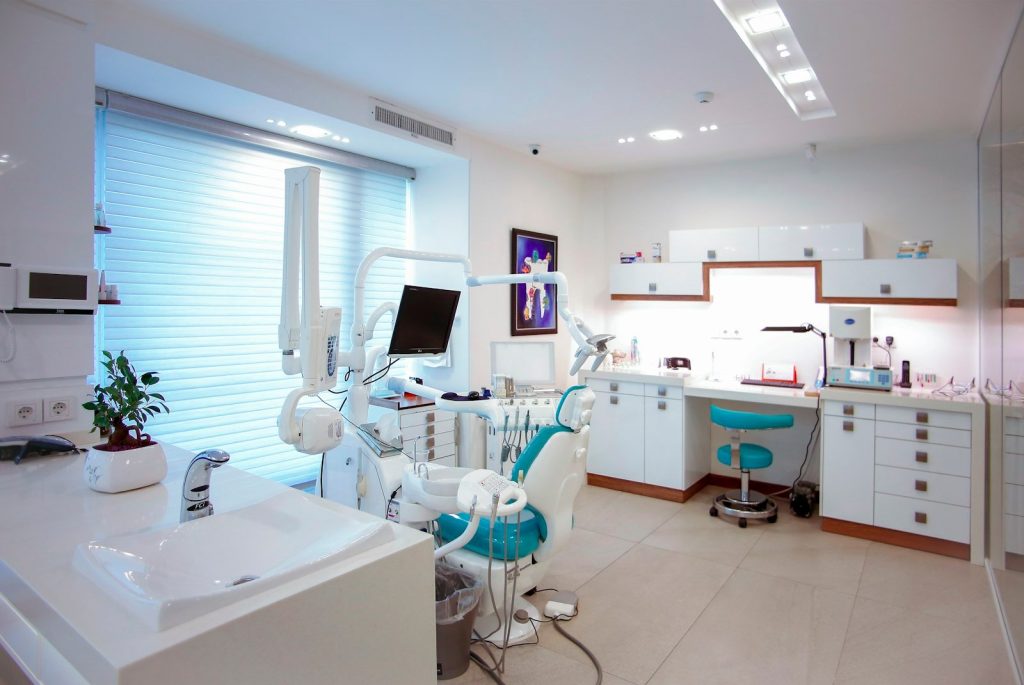
Patients suffer from dental anxiety. Transparent photos of a clean, modern waiting room, state-of-the-art operatory equipment, and friendly staff build immediate trust. Dental profiles with high photo counts receive 35% more clicks to their websites.
3. Building a Dental Review Acquisition Strategy
Reviews are the strongest local prominence signal in Google’s local algorithm. Practices with a high volume of positive reviews and active review velocity (consistent new reviews) outrank those with stale listings.
⚠️ Critical Note on HIPAA Compliance
When responding to patient reviews, you must never acknowledge that the reviewer is a patient of your clinic, as this violates HIPAA privacy laws. Even if the patient details their entire surgery in the review, your response must remain general: “Thank you for sharing your experience. We always strive to provide high-quality care to all visitors.”
To build a steady stream of reviews:
- Automate Requests: Integrate review software into your dental practice management systems (like Dentrix or Open Dental) to send text requests immediately after check-out.
- Educate Staff: Train hygienists and front-desk personnel to ask for reviews: “We loved hosting you today! If you enjoyed our gentle care, please leave a quick Google review. It helps other families in the community find us.”
- Always Respond: Respond to every review—both positive and negative. It signals to Google that your practice is actively engaged with the local community.
4. On-Page SEO and High-Converting Website Design
Ranking in Google Maps requires a highly optimized website backing up your business profile. Google audits your linked landing pages to verify that you are a legitimate, authoritative dental practice in your designated city.
Location-Specific Dental Landing Pages
If your dental practice operates in multiple Texas suburbs (e.g., Houston, Sugar Land, Katy, and The Woodlands), you must build unique, localized landing pages for each location. Each page needs localized H1s, customized service grids, maps embeds, unique staff bios, and authentic patient testimonials.
Inject Dentist & Medical Schema Markup
Schema markup is structured code placed behind the scenes of your website. It acts as a direct translation tool, telling Google’s crawlers exactly what your business is. You should inject Dentist schema detailing your exact business name, logo, physical address, geo-coordinates, telephone number, accepted insurances, and office hours.
5. Dominating Voice and AI Search Results (AISO)
With the rise of AI assistants like ChatGPT, Gemini, and Apple Intelligence, dental search queries are shifting from simple phrases like “dentist Houston” to complex natural phrases: “Find a gentle pediatric dentist in West Houston that accepts Cigna insurance and has parking.”
To capture high-intent patients in these AI-powered environments, your website must host conversational, question-and-answer-styled content. Building detailed FAQ segments answering real local queries about treatment costs, insurance coverages, sedation options, and emergency dental policies ensures your practice is cited by AI answers.